More Than Meets the Beak
The Importance of Quality Poultry Feed


Key Takeaways (TL;DR)
• A good formula is only the beginning. Ingredients, manufacturing, storage, and delivery all affect what reaches the birds.
• Consider how much the birds are eating. Even a well-balanced diet can fall short if feed intake is lower than expected.
• Keep an eye on feed texture and consistency. In layer mash diets, sorting and separation can change the mix of nutrients hens consume.
• Check the basics before making changes. Look at the feed, review flock records, and use testing to help answer specific questions.
The Importance of Quality Poultry Feed
Look at What the Birds Are Eating
When reviewing a feeding program, we want to see the formula. We also want to see the feed in the feeders.
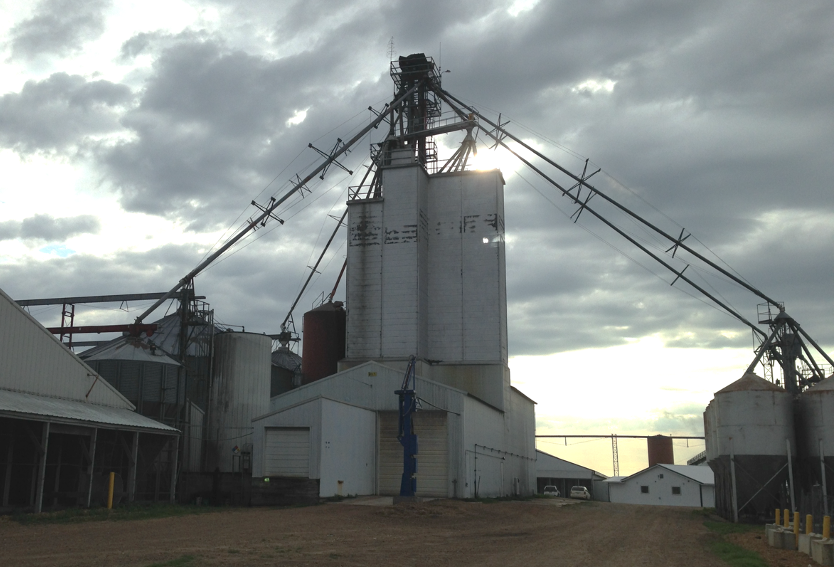
What we see in the feeders should reflect what’s on the formula sheet, but a lot can happen between the two. Ingredients vary. Equipment wears. Small additions can be difficult to weigh accurately. Poultry feed can separate during handling, and birds do not always eat everything in the proportions we intended.
Good poultry feed quality depends on managing that entire process, from receiving ingredients to what the birds consume.
For layers, daily nutrient intake, mash texture, and limestone particle size deserve particular attention. The details vary across species and production stages, but the basic question stays the same: Are the birds consistently receiving the feed we intended to provide?
Start With the Flock
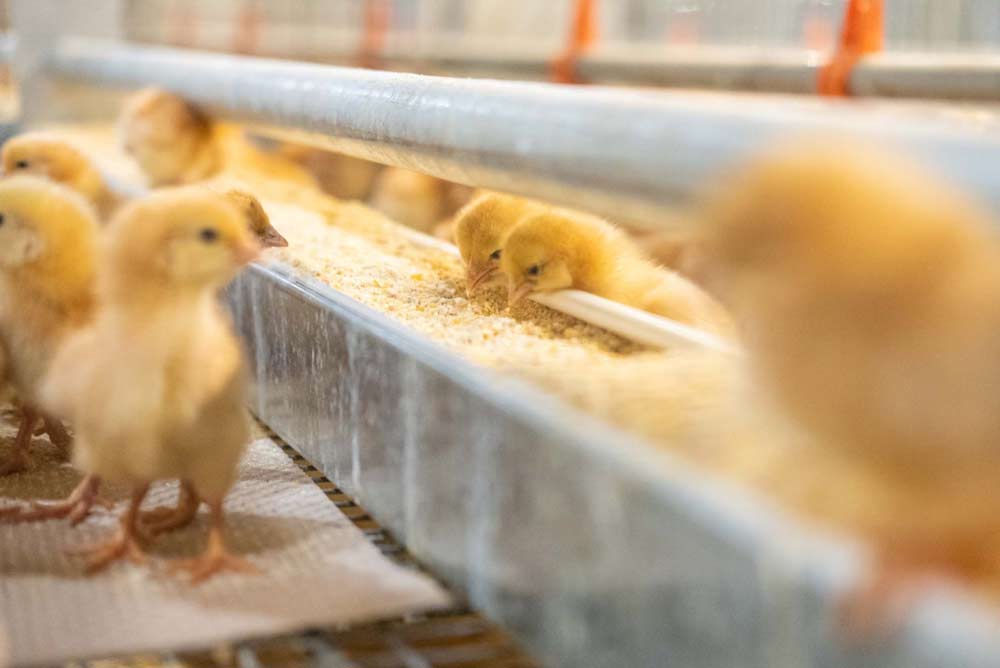
Before making changes to a diet, it helps to know how the birds are doing. Flock age, body weight, egg production, egg weight, and feed intake give us a starting point for that conversation.
How much the birds are eating is a big part of it. For example, a hen eating 100 grams of feed with 4% calcium gets 4 grams of calcium per day. If she eats 90 grams, that drops to 3.6 grams. Same poultry feed, less calcium consumed.
The same goes for amino acids and other nutrients. What’s in the diet is only part of the picture; we also need to know how much the birds are eating.
Before increasing nutrient levels, though, we need to understand why intake dropped. Is the house too warm? Has the feed texture changed? Is there a health issue? Depending on what we find, the answer may involve the diet, conditions in the barn, or both.
The goal is to make sure the poultry feeding program keeps up with the flock while addressing anything that may be holding intake back.
Know Your Ingredients
A formula is only as reliable as the ingredient information behind it. The nutrient values we use need to reflect what’s actually coming into the mill.
Corn, soybean meal, limestone, and fats can vary between sources and deliveries. A change in supplier, processing, or storage may mean an ingredient is different from what we’ve been using.
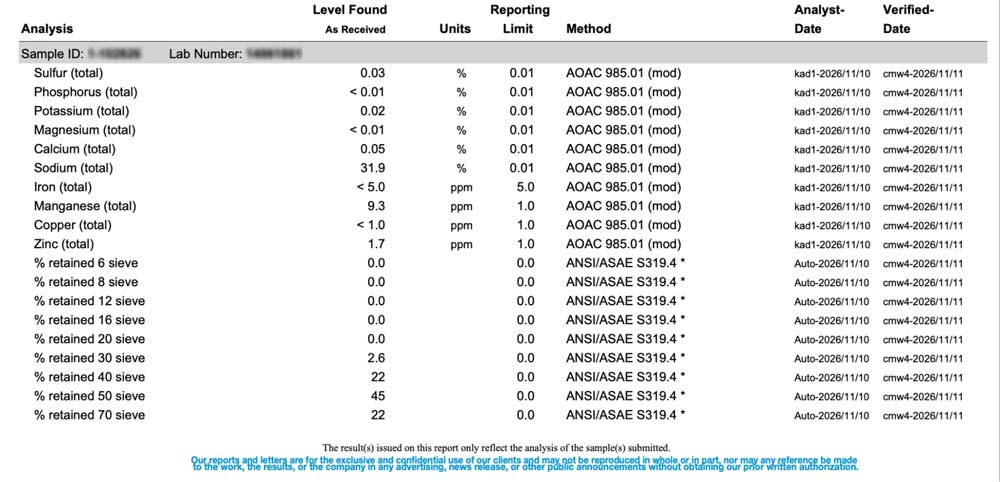
Purchasing specifications, checks when ingredients arrive, and routine testing help catch those differences. Testing the finished poultry feed gives us another way to check whether what we’re making lines up with the formula.
That doesn’t mean testing every load for everything. Focus on the ingredients and concerns most relevant to the operation, taking supplier history and previous results into account. It helps to ask: what would we do differently based on the result?
Keep the nutritionist and mill team informed when ingredients or suppliers change. A substitution may work just fine, but it’s worth reviewing before assuming it will perform the same way.
Take a Closer Look at Texture
With layer mash diets, it’s worth looking at the size and consistency of the feed particles, along with what the hens are leaving behind.
Too many fines can discourage intake, while overly coarse poultry feed can give hens more opportunity to pick through it. Feed can also separate as it moves through the system, so what reaches the birds may differ from what left the mill.
A diet might meet nutrient specifications on paper, but if hens are selecting larger particles and leaving fines in the trough, they may not be eating the mix we intended. That alone doesn’t explain a production problem, but it gives us a place to start. Is it happening throughout the house? Does the poultry feed look different from the last delivery?
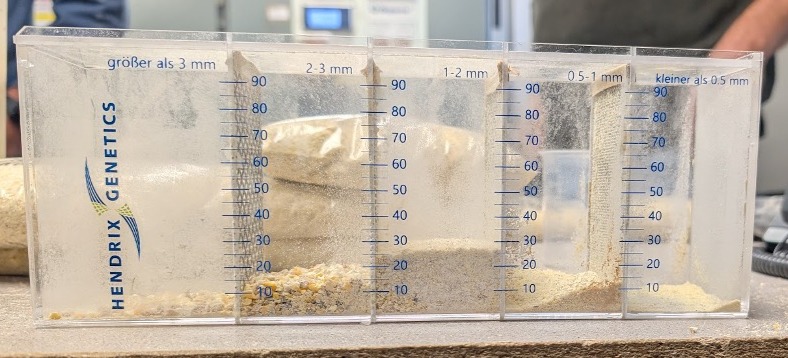
A sieve check is a particle size test that sorts a feed sample through a stack of screens. This puts numbers behind those observations. Instead of saying “this feed looks too fine,” we can compare samples from different deliveries or locations in the feeding system. Limestone deserves a look, too. For layers, we need to consider both the calcium level and the balance of coarse and fine limestone as the flock moves through production.
Coarser isn’t always better. We’re looking for a mix of particle sizes that the hens eat consistently and that works well in the feeding system.
Get the Mix Right
A formula needs to work in the mill as well as it does on paper.
That starts with weighing ingredients accurately, adding them in the right order, and mixing them thoroughly. Batch size, mixing time, and equipment condition all play a role. Routine mixer uniformity testing helps check how evenly ingredients are spread throughout the batch.
Small additions are worth a closer look. The amount on the formula sheet may be correct, but can the scale reliably weigh it? And how is it getting mixed into the rest of the poultry feed?
The nutritionist and mill team should work through those details together. Depending on the setup, it may make sense to put an ingredient into a premix, change how it’s added, or address an equipment issue.
Mill personnel know what works day to day and where things get difficult. Bringing them into the conversation early helps make sure the poultry feeding program is practical to produce consistently.
Know What You’re Testing For
Before sending a poultry feed sample to the lab, be clear about what you want to learn. Are you checking nutrient levels, looking into excessive fines, or trying to find out whether the feed is mixed evenly?
That question helps determine what to test and how to collect the samples.
Combining several samples can give a useful picture of average nutrient content. But if you’re looking for differences within a batch or along a feeder line, keep those samples separate. Mixing them together could hide the variation you’re trying to find.
Once the results come back, review them alongside the formula, feed intake, ingredient history, and flock records. If something looks off, follow up before making a major change. The result may point to a poultry feed quality issue, but how the sample was collected and normal variation in lab results also need to be considered.
Keep Cost in Perspective
Poultry feed quality should meet the flock’s needs at a cost the operation can justify.
Paying more per ton, adding more products, or choosing a “premium” ingredient doesn’t automatically make a better poultry feed. At the same time, a cheaper formula may not save much if it’s difficult to manufacture consistently or flock performance suffers.
Price per ton is part of the decision. We also need to look at egg production, egg quality, and whether any savings hold up once the feed is in use.
Questions to Take Back to the Farm
In our first post, we talked about the value of nutritionists, veterinarians, and farm teams working together. Poultry feed quality is a good place to put that into practice, with the mill team involved from the start.
If production drops or shell quality changes, feed is worth checking, but we need to take a closer look before assuming it’s the cause. Start with a few questions:
The answer may be a formula adjustment, a change at the mill, or something that needs attention on the farm. Working through those questions together helps us decide where to focus.
Like this blog?
Check out: How Poultry Veterinarians and Nutritionists Work Together on Poultry Farms
Frequently Asked Questions
Q: What are the biggest factors affecting poultry feed quality?
A: Ingredient quality, manufacturing consistency, storage, delivery, and feed intake all influence what birds actually consume.
Q: Can a balanced diet still fall short?
A: Yes. If birds eat less than expected, their daily nutrient intake decreases even if the feed formula hasn't changed.
Q: Why does mash texture matter for layers?
A: Feed particle size affects intake and sorting. Hens may selectively eat larger particles and leave fines behind, changing the nutrients they consume.
Q: How often should poultry feed be tested?
A: Testing frequency depends on ingredient variability, supplier history, and the operation's needs. Focus testing on specific concerns and use results to guide decisions.
Q: Does more expensive feed mean better poultry feed quality?
A: Not necessarily. The goal is consistent feed quality that supports flock performance and provides the best overall value, not simply the highest price per ton.
Subscribe to our Newsletter
Ready to Work Together?
If you need a poultry veterinarian who understands the daily realities of production, prevention and performance, Wilson Vet Co. is ready to help.
📞 Get In Touch