How to Safely Handle Formalin
Best Practices for Poultry Samples



Key Takeaways (TL;DR)
• Formalin is used by poultry veterinarians to preserve tissue samples for histological testing during disease investigations.
• Because formalin contains formaldehyde, it is important to handle it carefully to protect yourself and preserve the quality of your samples.
• Always wear gloves and never touch liquid formalin with bare skin.
• Securely seal and properly label every jar before shipping.
Best Practices for Poultry Samples
Doesn’t this stuff cause cancer!?
Okay, so we all know poultry veterinarians are a little odd. I've never seen anyone else smile…. SMILE while they’re necropsying mortality. Seriously, some of these birds are RANK! And they couldn’t be happier…. weirdos, all of them.
When a poultry veterinarian sees something interesting, they’ll ask me to pull out swabs or label bags. I’ve got no issues there. But when they ask me to get a formalin jar? I’m less excited. Doesn’t that stuff cause cancer?! I don’t wanna touch it with a 10-foot pole!
Yes, everyone should use caution when working with formalin. This blog will review what formalin is, why it’s used by your poultry veterinarian, and how to stay safe while around formalin.
What is Formalin?
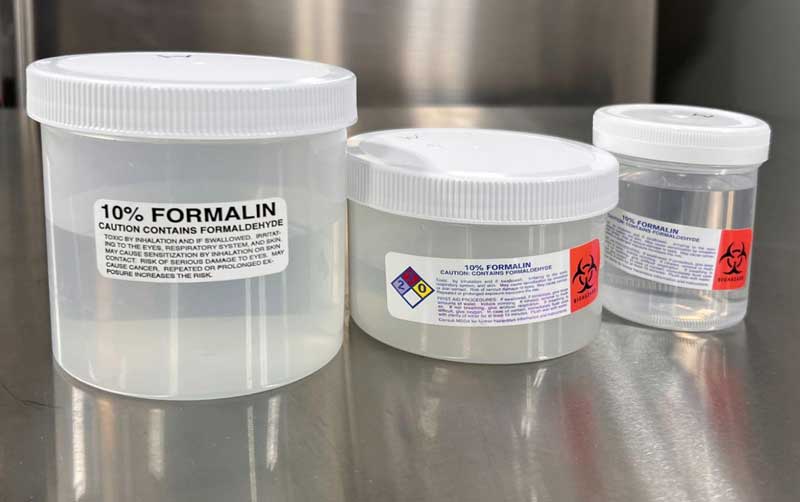
Formalin is a liquid solution used to preserve biological tissues for histological testing. It is 37% formaldehyde with 6-12% methyl alcohol and water. The standard formalin jar is a 10% formalin solution.
Formalin is used by your poultry veterinarian during disease investigations because it preserves tissues and prevents them from rotting. This allows them to be viewed under a microscope for histology even years after the samples were collected.
Hazards of Working with Formalin
Formalin is classified as a carcinogenic occupational hazard by OSHA. This is why understanding the hazards and taking steps to reduce your exposure are important when collecting samples at your poultry operation.
Exposure
Formaldehyde exposure can occur through inhalation of vapors, direct contact with the skin or eyes, and ingestion. Exposure may cause irritation of the eyes, nose, throat, and respiratory tract, as well as coughing, tearing, wheezing, and skin irritation.
Ventilation
One of the main ways to stay safe around formalin is ventilation. In a laboratory setting, this would mean working under a hood. In the field or on a poultry farm, this means processing samples with formalin in a well-ventilated area or outside. Keep the formalin jar away from your face and do not inhale the vapors.
Handling and Storing Formalin
It’s important to handle and store formalinjars with care.
Formalin Rules of Thumb
- Never include tissues greater than 5 mm thick (1/4 inch). Tissues that are too thick will decompose before preservation. This can impact laboratory results.
- Never "overstuff" the jar. Too many tissues can overwhelm the chemical fixation and will increase the likelihood that some tissue will decompose in the jar. Generally no more than 10% of the volume in the total jar should be tissue. This also helps prevent overfilling and spilling. If a lot of tissues need to be sampled, either use multiple containers or a larger formalin jar.
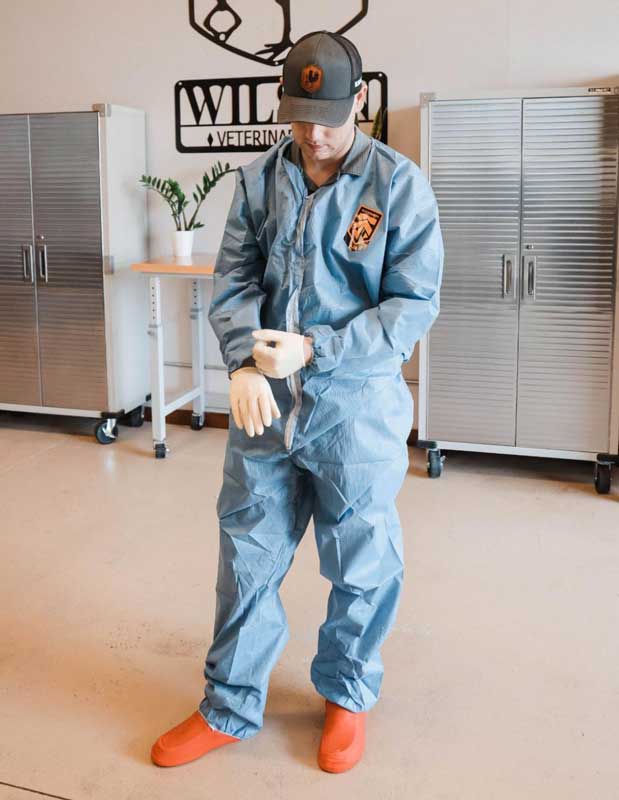
PPE
Any time you’re working with formalin jars, you should wear gloves. This provides a protective layer between the formalin and your skin. If your glove comes in contact with the formalin, immediately take off your glove and put on a new one. Gloves are not a perfect barrier and should not be used as a justification for putting a finger in a formalin jar.
Never touch the liquid formalin with your bare hands. Do not remove any tissues from a formalin jar after they have been added. If an additional or new formalin jar is needed to get the correct samples, use a new or second jar rather than repurposing the original formalin jar.
Handling
Formalin jars should always be handled with care. Before opening any formalin jar, first make sure there is a stable, flat surface for the jar to be placed. This will prevent any accidental spills. The lid should not be left off the jar for an extended period of time. When not actively adding tissues to a formalin jar during a necropsy, keep the lid placed loosely over the top. When the necropsy is completed, firmly seal the lid onto the container before labeling the formalin jar.
Storage
Formalin is generally considered usable for several years in good storage conditions. Containers should remain properly labeled and should be stored according to the manufacturer's SDS and applicable workplace requirements. Workers should never place formalin into an unlabeled container or a container that could be mistaken for a food, drink, medication, or other commonly handled material.
Winterizing Formalin Jars
Many times formalin jars are exposed to ambient temperatures in storage (car, garage storage, etc.). On cold winter days, formalin will freeze if it’s not winterized. To prevent formalin jars from freezing in the winter, add 70% isopropyl alcohol to formalin containers at a 1:10 ratio. Then mark the jar with a “W”, so it can be identified as being winterized. This is important because formalin from the manufacturer is not typically winterized.
Example: If a formalin container has 90mL of formalin, add 10mL of isopropyl alcohol for winterization.
Spills
Spills should never be cleaned casually or without appropriate PPE. Be mindful to avoid creating additional exposure while attempting to clean the spill. Any SDS, facility waste procedures, and applicable federal, state, and local requirements should be followed when dealing with a formalin spill.
Useful information
● Formalin dissociates in water.
● Formalin can be inactivated by ammonia-based products.

Shipping Formalin Jars
No Ice Needed
Unlike other samples, formalin jars do not need to be shipped on ice. They can be sent at room temperature and can be shipped ground to arrive in 7-10 business days when they are the only items in the shipping container.
Label the Lids
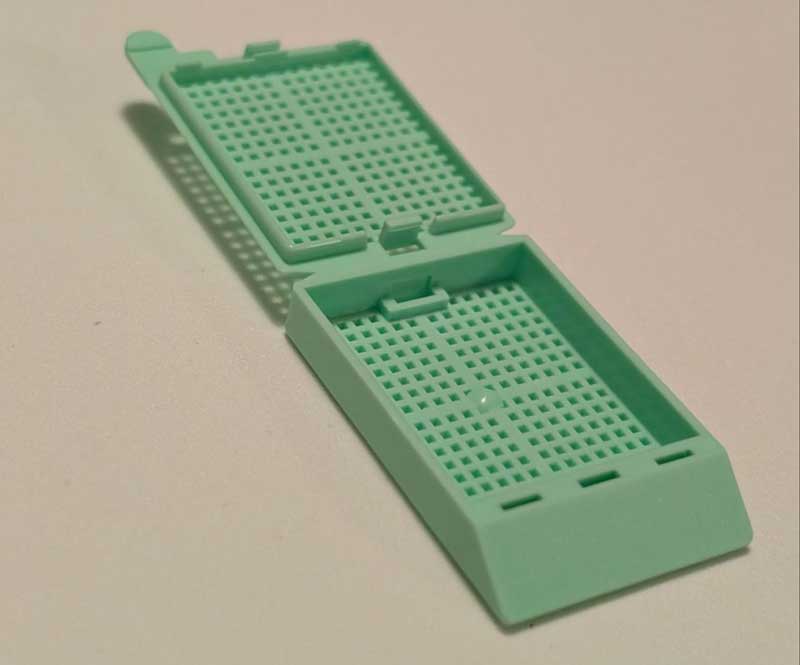
Formalin jars should be labeled with the company name, flock age, and date, along with every organ that is inside the jar. The lid of the jar should be labeled with the same information. This will allow the pathologist to know exactly what to look for and will not miss small tissues, like nerves. A histopathology cassette can also be used to help store small tissues inside a formalin jar.
Stabilize Jars in Shipping
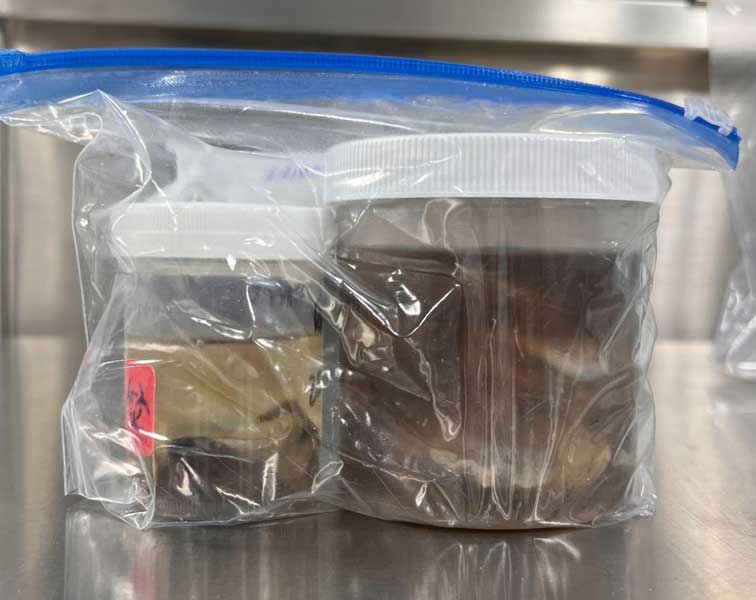
Formalin is a carcinogenic substance. To prevent cracking or spilling of formalin jars, make sure the tops are well sealed. Place the jar in a sealed plastic bag with paper towels in case of spillage during shipping. Pack them with available paper, packing peanuts, or other material to keep them upright during the shipping process. The last thing you want is a laboratory worker to open a box with liquid formalin dripping everywhere and half-fixed tissues rotting in the container.
More Information on Formalin
If you want more information on formaldehyde in general or working with formalin, both OSHA and the CDC are great resources.
OSHA
● Formaldehyde Safety & Health Topics: https://www.osha.gov/formaldehyde
● Formaldehyde Fact Sheet: https://www.osha.gov/sites/default/files/publications/FORMALDEHYDE-FACTSHEET.pdf
CDC/NIOSH
● Pocket Guide to Chemical Hazards: Formalin: https://www.cdc.gov/niosh/npg/npgd0294.html
Fequently Asked questions
Q: Why is formalin used for poultry tissue samples?
A: Formalin preserves tissue samples and allows a poultry pathologist to examine the tissues under a microscope.
Q: What precautions should I take when handling formalin?
A: Always wear gloves and work in a well-ventilated area. Avoid breathing formalin vapors or getting the liquid on your skin or in your eyes. Never transfer formalin between containers in the field. If you need more room, use another jar!
Q: Do formalin-fixed tissue samples need to be shipped on ice?
A: No, formalin-fixed tissues can be shipped at room temperature.
Q: How should I label formalin jars for shipping?
A: Label both the jar and its lid with the company name, flock age, collection date, and every tissue included in the jar.
Subscribe to our Newsletter
Ready to Work Together?
If you need a poultry veterinarian who understands the daily realities ofproduction, prevention and performance, Wilson Vet Co. is ready to help.
📞 Get In Touch