Are You Nose Blind?
Ammonia in Poultry Houses: Symptoms, Risks & How to Manage High Levels



Key Takeaways (TL;DR)
Ammonia is a harmful gas producedwhen manure breaks down, especiallyin poultry houses with excess moistureand poor ventilation. Because farmerscan become nose blind to it,dangerous levels often go unnoticed.Even low concentrations can harm birdhealth, reduce performance, andincrease disease risk making regular monitoring
Ammonia Symptoms, Risks & How to Manage High Levels
Ammonia in poultry houses is a common environmental challenge that can significantly impact bird health, and performance. Understanding ammonia levels, how they form, and how to manage them is essential for maintaining healthy poultry flocks.
What is Ammonia?
Ammonia (NH₃) is produced when uric acid from poultry manure is broken down by bacteria in the environment. This process is heavily influenced by environmental conditions inside the poultry house. Moisture, temperature, and pH are the main drivers for ammonia levels in a poultry barn. Ammonia exists as a gas and can accumulate rapidly, especially during colder months when ventilation is reduced to conserve heat.
Am I Nose Blind?
Have you ever walked into a room where fresh chocolate chip cookies are being made? The smell is intoxicating! All of the sudden, you’re hungry for a warm, delicious freshly baked treat. But then a few minutes later, you don’t even notice the smell anymore? This process is called olfactory fatigue, or nose blindness.
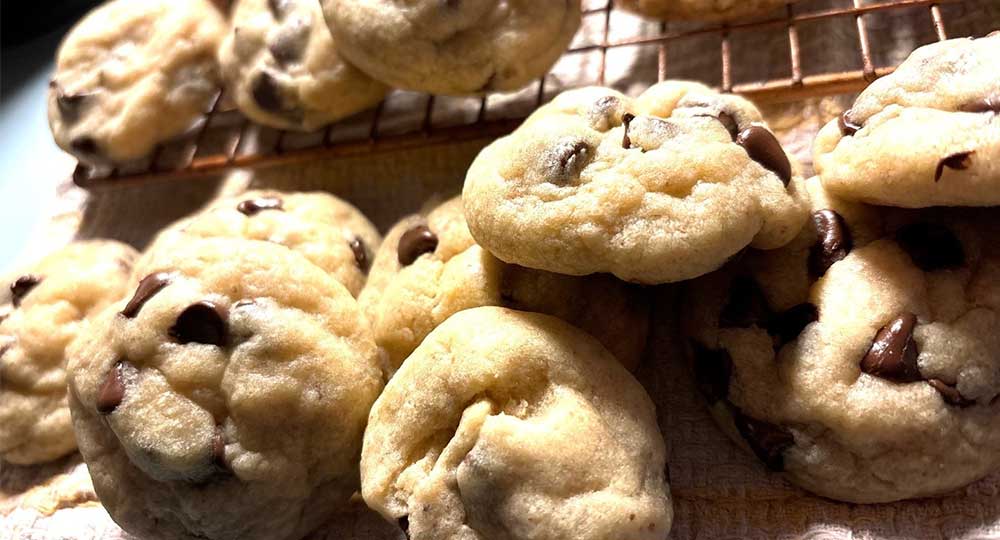
Over time as you’re exposed to a smell, your body doesn’t recognize it as new anymore and the ability to detect the smell goes away. This can happen with more than warm, delicious cookies! Over time as producers spend more time in their poultry houses, they can become nose blind to ammonia in the house. Levels can become surprisingly high at times (especially in the winter) without poultry producers knowing. This is why regularly checking ammonia levels is so important. Unlike a fresh chocolate chip cookie, high ammonia levels can cause serious health challenges for flocks.
How Does Ammonia Hurt My Birds?
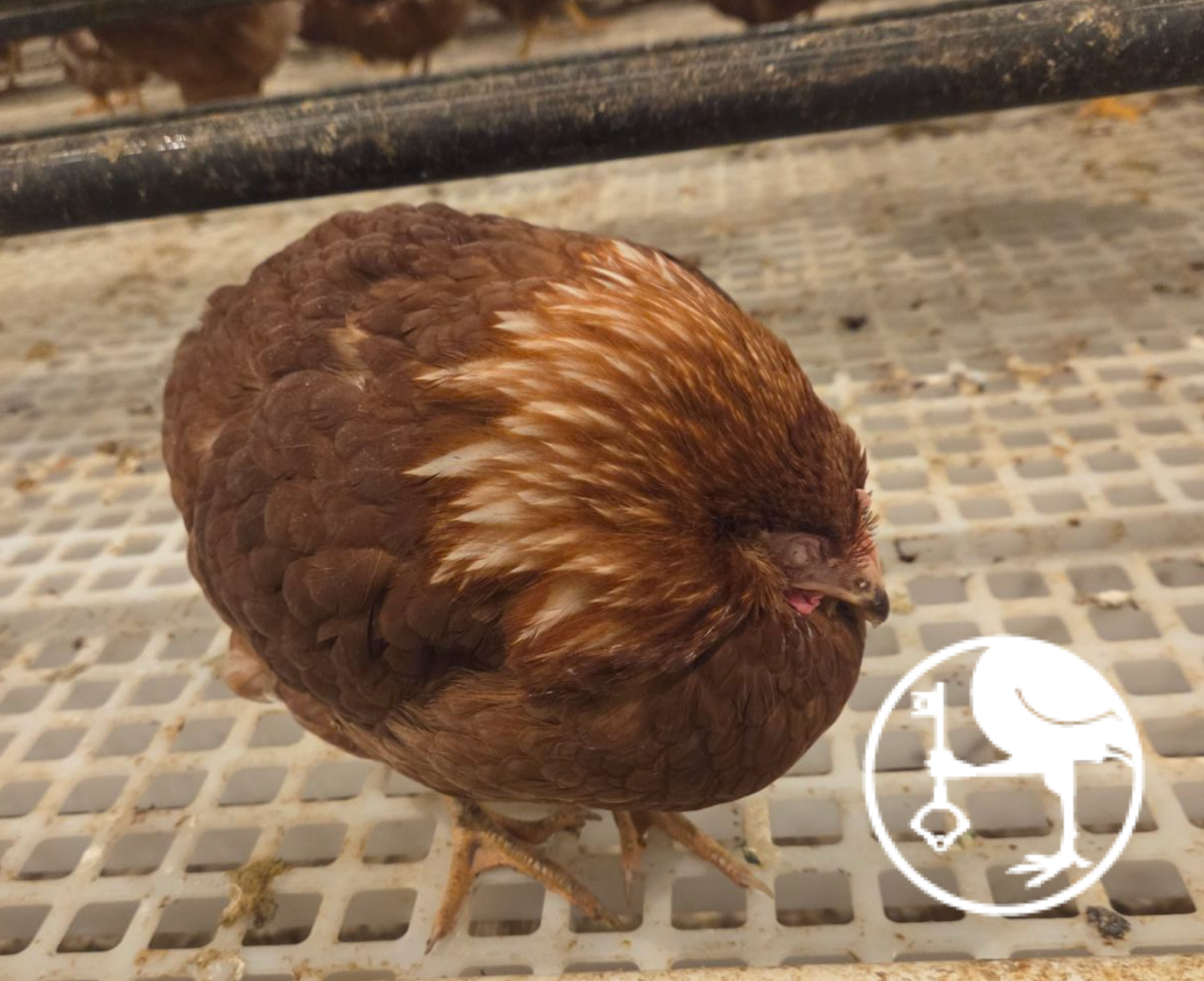
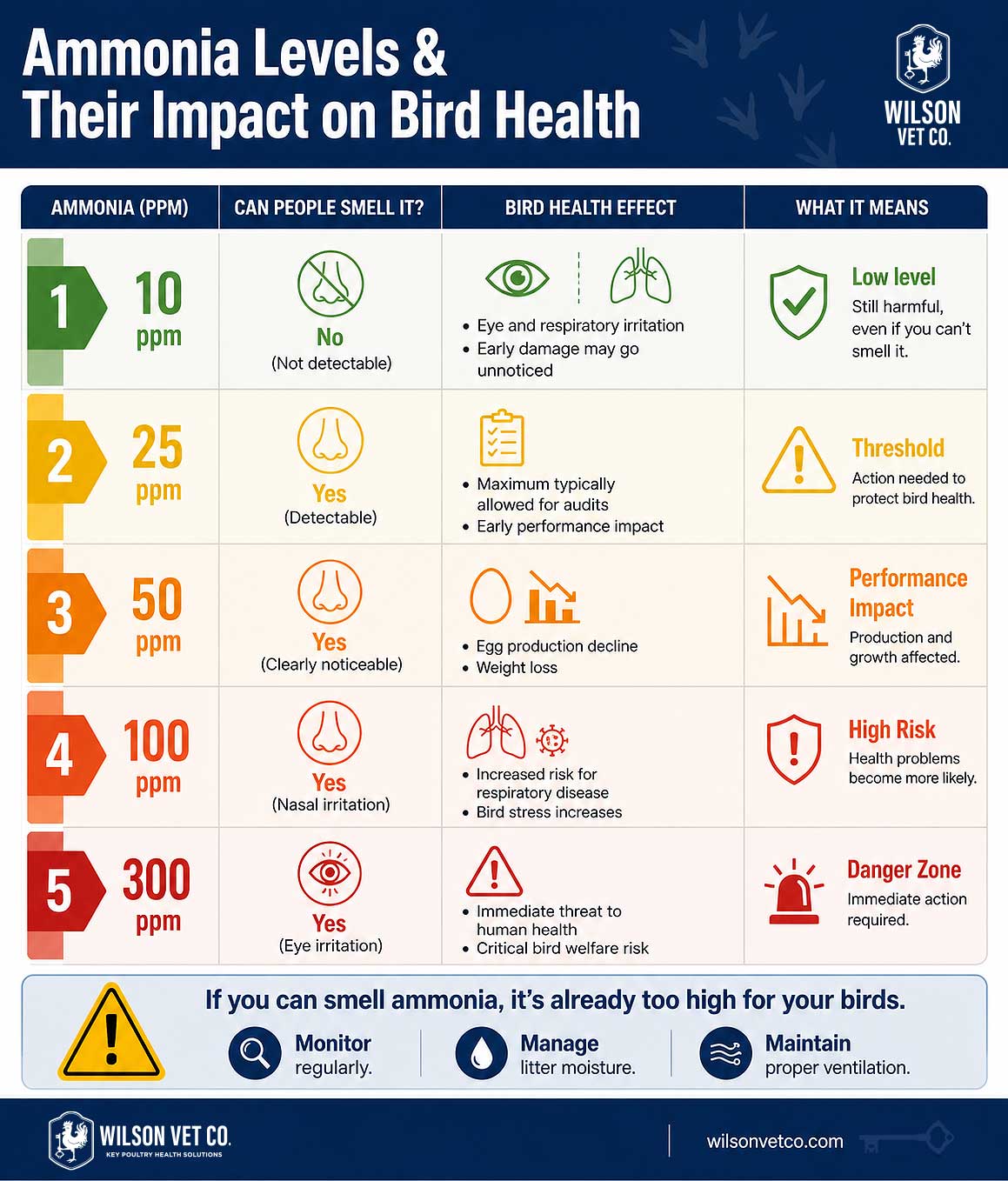
Poultry are much more sensitive to ammonia than humans, meaning that oftentimes by the time humans can smell ammonia, it’s likely already affecting the health of the poultry on the farm.
Ammonia levels as low as 10 parts per million (ppm) can damage the respiratory tract of poultry. Typically, humans begin to smell ammonia levels at about 25ppm. This 25ppm level is also where many internal and third-party auditors set their threshold.
It can be easy for ammonia levels in a poultry house to raise above this 25ppm level, especially in the wintertime. Growers may become nose blind over time and may not realize how high the levels have gotten, until clinical signs begin showing.
Poultry that have been exposed to high levels of ammonia will often look “fluffed up,” hunched over, with their necks close to their bodies. This appearance is not specific to ammonia, but it is a good sign that the birds are not feeling well.
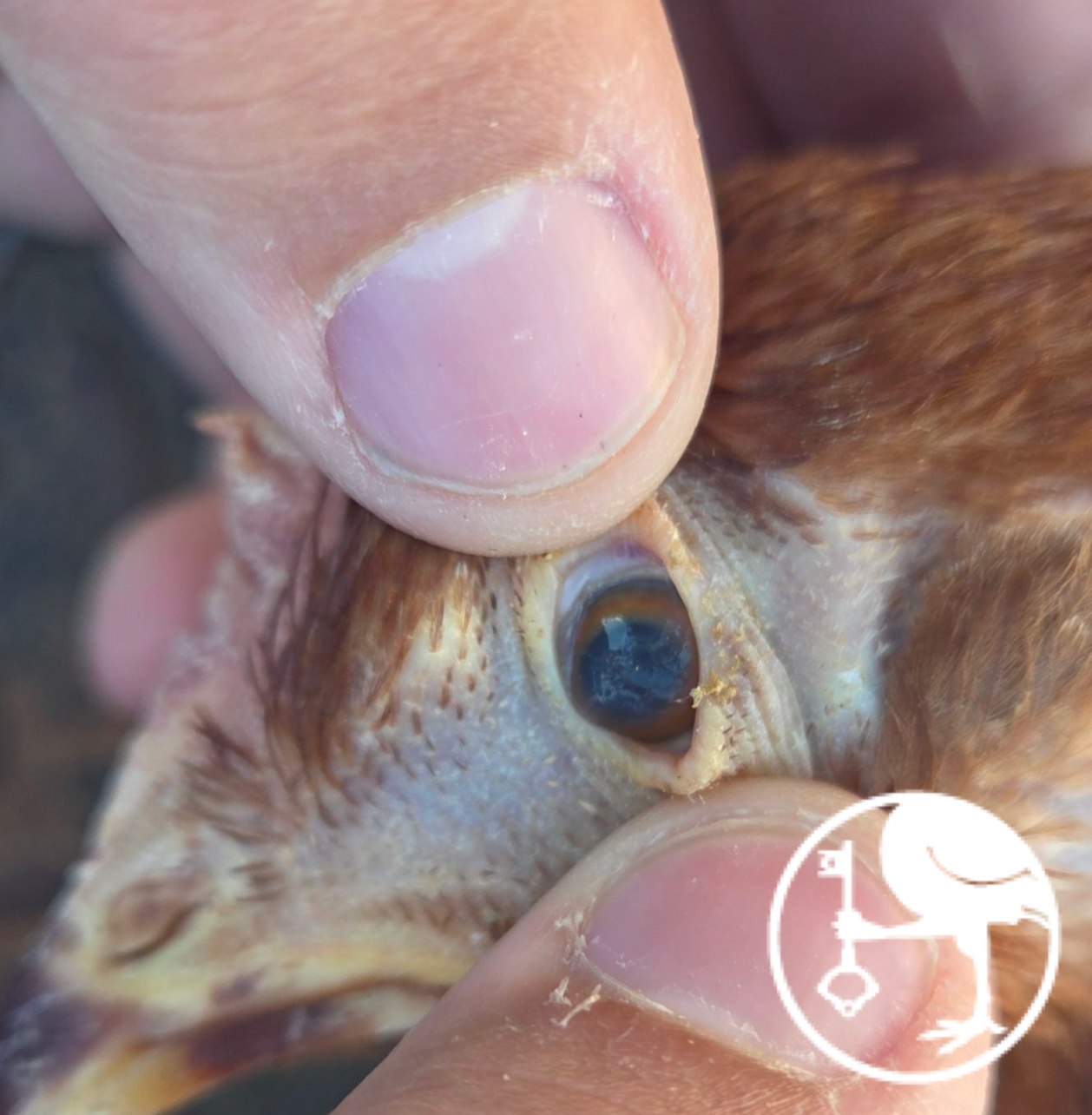
Long-term exposure to high levels of ammonia will also cause eye lesions and respiratory damage. This can make a poultry flock more susceptible to other respiratory diseases. Spotting eye lesions can be pretty easy once you know what to look for.
The bird’s eyes will have a cloudy appearance spread across the surface of the eye. The longer the flock has been exposed to high levels of ammonia, the more cloudy the eye will look.
Ammonia doesn’t just affect birds, it also poses risks to human workers. Farm staff exposed to elevated ammonia levels may experience eye irritation, coughing, and respiratory discomfort. Keeping a close eye on ammonia levels on a poultry farm not only impacts bird health, but also worker health safety.
Why is Ammonia Worse in the Winter?
Ammonia is a gas created in the environment when microbes interact with poultry manure. This makes the environment the manure is in very important when it comes to how fast the ammonia is created. Moisture, temperature, and pH are the main drivers for ammonia levels in a poultry barn.
In the wintertime when we all want to bundle up, poultry houses often do the same. To keep the birds warm and to reduce the amount of natural gas used to heat poultry farms, ventilation is limited. This means less fresh air circulates from outside through the barn and less stale barn air is moved outside. The result keeps more moisture in the poultry house, which allows more ammonia to be created than an environment with less moisture. Likewise, because less fresh air is passing through the barn, that extra ammonia is not cleared out of the facility as often. The result means that for that majority of poultry operations, wintertime is also the most common time for ammonia-related poultry health issues to arise.
To help mitigate this, keep an eye on moisture in the barn and increase ventilation when the weather allows. But by no means do poultry producers want to chill the birds with too much cold airflow. Especially in climates with very cold winters, the balance between ventilation, house temperature, and ammonia levels can be challenging. Regularly measuring ammonia levels in the poultry barn will help give insights on when it's time to make adjustments to ventilation.
Fequently Asked questions
Q: What is ammonia in poultry houses?
A: Ammonia is a gas produced when bacteria break down poultry manure.
Q: Can farmers become nose blind to ammonia?
A: Ammonia is a gas produced when bacteria break down poultry manure.
.png)
.jpg)