Is This Poultry Disease Reportable in My State?
Understanding Federal and State Poultry Disease Reporting Requirements


Key Takeaways (TL;DR)
Understanding Federal and State Poultry Disease Reporting Requirements
This post provides an overview of which poultry diseases are federally reportable and what that means for producers and veterinarians. While federal guidelines set the baseline, many states have additional reportable diseases and requirements that go beyond those minimums. Because state regulations can vary, it’s always a good idea to stay connected with your local state animal health officials for the most accurate guidance.
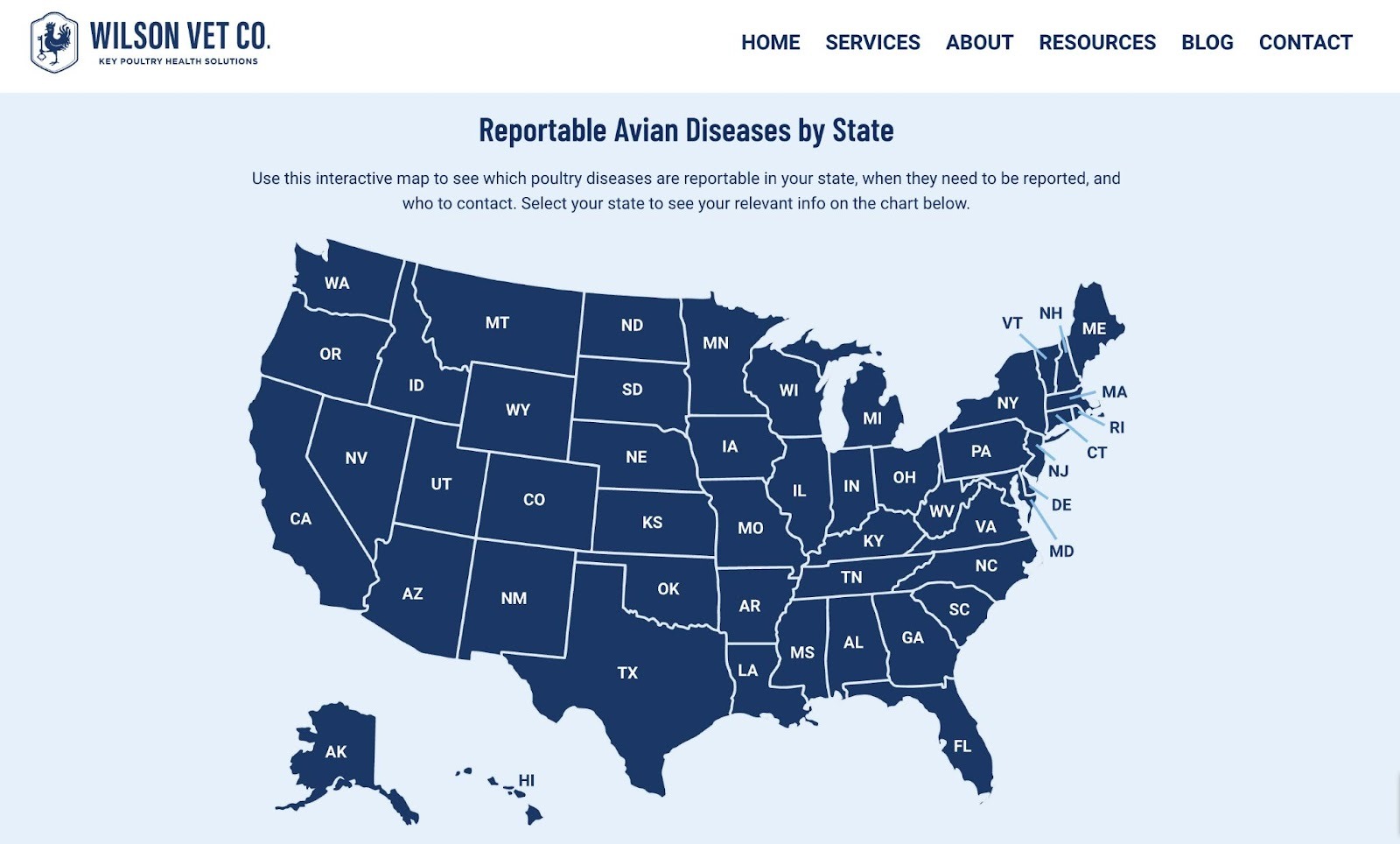
To make this information easier to navigate, Wilson Vet Co has compiled state-by-state reporting requirements into an interactive, easy-to-use map. You can explore each state’s details on our website or by visiting the link below: https://www.wilsonvetco.com/resources
What Is a Reportable Disease?
In the United States, a reportable disease is a disease or condition that must be reported to government authorities when it is suspected or diagnosed. These reporting requirements exist to protect animal health, public health, and the nation’s food supply by allowing officials to detect, track, and respond to disease threats as early as possible.
Why Are Diseases “Reportable”?
Reportable diseases are typically those that:
- Have the potential to spread quickly
- Could cause significant economic loss
- May threaten animal welfare, food security, or public health
- Are of concern for international trade
By requiring timely reporting, animal health officials can investigate cases, implement control measures, and help prevent wider outbreaks.
Poultry Diseases that are Reportable in all 50 States
Who Decides Which Poultry Diseases Are Reportable?
At the federal level, the U.S. Department of Agriculture (USDA) maintains a list of diseases that must be reported across the country. These federal requirements establish a minimum standard for disease reporting nationwide.
However, states play a major role as well. Each state may have its own list of additional reportable diseases and specific guidelines that go beyond federal requirements. This means a disease that is reportable in one state may not be reportable in another, or the reporting process may differ.
The poultry diseases that are reportable on the federal level are listed below. All of these diseases must be reported to the State Veterinarian immediately.
Federally Listed Reportable Poultry Diseases
- Avian Influenza (HPAI and H5/H7 LPAI)
- Chlamydia psittaci (Chlamydiosis)
- Salmonella gallinarum (Fowl Typhoid)
- Salmonella pullorum (Pullorum disease)
- Exotic (Virulent) Newcastle Disease
- West Nile Virus
Who Is Responsible for Reporting?
Reporting these diseases is absolutely critical. These diseases can spread quickly, affect other producers, and can even have international trade implications. It’s important to communicate with your veterinarian as soon as possible if you think your flock may have a reportable disease.
Reporting the disease to the state officials is the responsibility of:
- Veterinarians
- Diagnostic laboratories
- Animal owners or producers (in certain situations)
Who Do I Contact to Report a Poultry Disease?
Reports are typically made to a State Veterinarian’s Office, state animal health agency, or directly to federal authorities, depending on the disease and circumstances.
What Happens After a Disease Is Reported?
Once a report is made, animal health officials may:
- Conduct follow-up testing or investigations
- Recommend biosecurity or movement controls
- Provide guidance to limit disease spread
- Coordinate with federal agencies if needed
The goal is not to penalize producers, but to protect animals, operations, and the broader industry.
Why This Matters to Producers and Veterinarians
Understanding reportable disease requirements helps ensure:
- Faster response to potential outbreaks
- Compliance with state and federal regulations
- Protection of animal health and market access
Because requirements can vary by state and change over time, staying informed is essential.
How Do Reportable Diseases Impact My Farm, Industry, or State?
Reportable poultry diseases can affect more than just one flock. In some cases, they may impact bird movement, sales, or trade, which is why reporting to the right people is important. Proper reporting helps ensure the response is appropriate and avoids unnecessary disruption.
Disease reporting systems are designed to protect confidentiality while sharing enough information to help protect neighboring flocks and improve regional flock health.
Most importantly, reporting diseases is not about punishment or enforcement. It helps state and regional animal health teams understand what diseases are present, detect emerging issues, and improve disease control tools like biosecurity, management, and vaccine practices.
By reporting diseases when needed, producers are helping protect their own flocks, supporting their neighbors, and contributing to a healthier, more resilient poultry industry overall.
Where to Find More Information
For the most accurate and up-to-date guidance, always check with your local state animal health officials.
To make this information easier to navigate, Wilson Vet Co. has compiled state-by-state reporting requirements into an interactive, easy-to-use map. You can explore each state’s details on our website or by visiting the link below: https://www.wilsonvetco.com/resource
Being aware of what constitutes a reportable disease is a key part of responsible animal health management and an important step in protecting the U.S. livestock and poultry industries as a whole.
Fequently Asked questions
1. What is a reportable poultry disease?
A disease that must be reported to government authorities when suspected or diagnosed.
2. Are reportable diseases the same in every state?
No. States may have additional diseases and reporting requirements beyond federal requirements.
3. Who should report a suspected disease?
Depending on the situation, veterinarians, diagnostic laboratories, and animal owners or producers may be responsible for reporting.
4. Who should I contact if I suspect a reportable disease?
Contact your veterinarian and the appropriate State Veterinarian’s Office or state animal health agency.
Subscribe to our Newsletter
.png)
Ready to Work Together?
If you need a poultry veterinarian who understands the daily realities ofproduction, prevention and performance, Wilson Vet Co. is ready to help.
📞 Get In Touch