NPIP Testing Requirements
How Often Does My Flock Need to Be Tested?

Key Takeaways (TL;DR)
NPIP participation requires negative Pullorum-Typhoid (PT) testing. Initial qualification tests up to 300 adult birds. PT testing must be repeated every 12 months. NPIP PT-Clean status allows interstate poultry movement. Testing must be performed using USDA-approved labs and methods.
How Often Does My Flock Need to Be Tested?
NPIP Testing Requirements
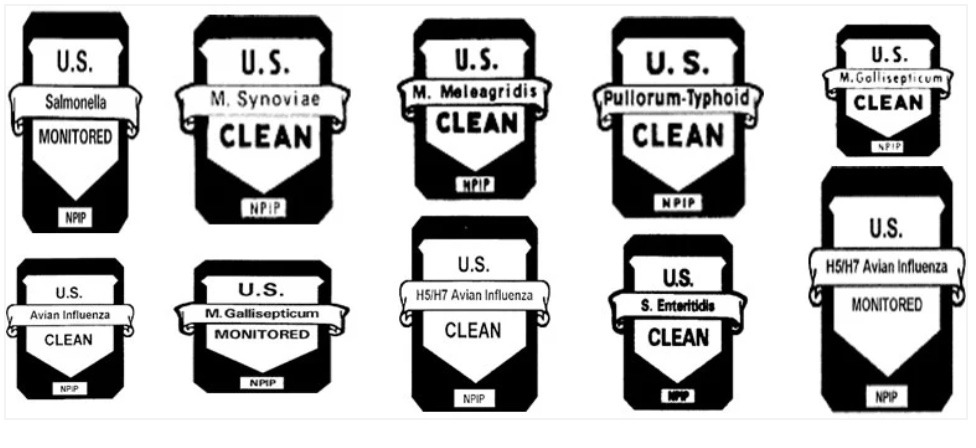
In this article, we’ll review the testing requirements for participation in the National Poultry Improvement Plan (NPIP). The NPIP is the federal-state cooperative program that helps ensure poultry and poultry products are free of certain diseases and eligible for interstate movement and exhibition. While the basics of the NPIP Program are the same, differences in species type and flock size will determine which programs a flock may qualify for. Check the NPIP website for more information on specific program standards. https://www.poultryimprovement.org
Core NPIP Testing Requirements
To participate in NPIP (whether as a breeder flock, hatchery, or exhibition flock), your birds must meet minimum testing standards to demonstrate freedom from specific diseases. The first set of diseases your flocks need to be free of to enter the NPIP Program are Salmonella Pullorum & Salmonella Gallinarum. This is often shortened to Pullorum-Typhoid or PT.
Pullorum-Typhoid (Salmonella Pullorum & Salmonella Gallinarum)
Both Salmonella serotypes are considered eradicated in the U.S. This is due to poultry companies following the testing guidelines set in the NPIP Program Standard. Even though the NPIP programs are voluntary by nature, they are the baseline for poultry health programs in the United States.
- The Pullorum-Typhoid (or PT) testing is the required baseline test for NPIP entry. Your birds must test negative before being added to the program.
- The testing is typically performed on birds ≥ 4 months old (or at sexual maturity for some game birds).
- Initial qualification: all eligible adult birds in the flock are tested (up to 300 birds per flock). Sometimes these are referred to as “state testing” or “state birds”
- Annual re-testing: required to maintain Pullorum-Typhoid Clean status.
Pullorum-Typhoid (PT) Requirements for NPIP
Pullorum-Typhoid testing is mandatory for NPIP participation. This testing certifies your flock as “Pullorum-Typhoid Clean.” Without this status, a flock cannot be considered part of NPIP.
What disease is tested?
• Salmonella Pullorum
• Salmonella Gallinarum
These two diseases are tested together under the PT-Clean program.
What flocks are Tested for PT?
The NPIP program is broken up into different sections based on flock type. This means that commercial egg layers and turkeys may not have the same testing requirements for all diseases. Likewise, each species is not eligible for all NPIP Program Standards. You can always reference the NPIP website for more details. https://www.poultryimprovement.org
For Pullorum-Typhoid testing, these flock types are tested:
- Breeding birds (chickens, turkeys, game birds, waterfowl used for breeding)
- Exhibition flocks and hatchery supply flocks
- Birds 4 months of age or older (or sexually mature)
Initial Qualification Testing for PT
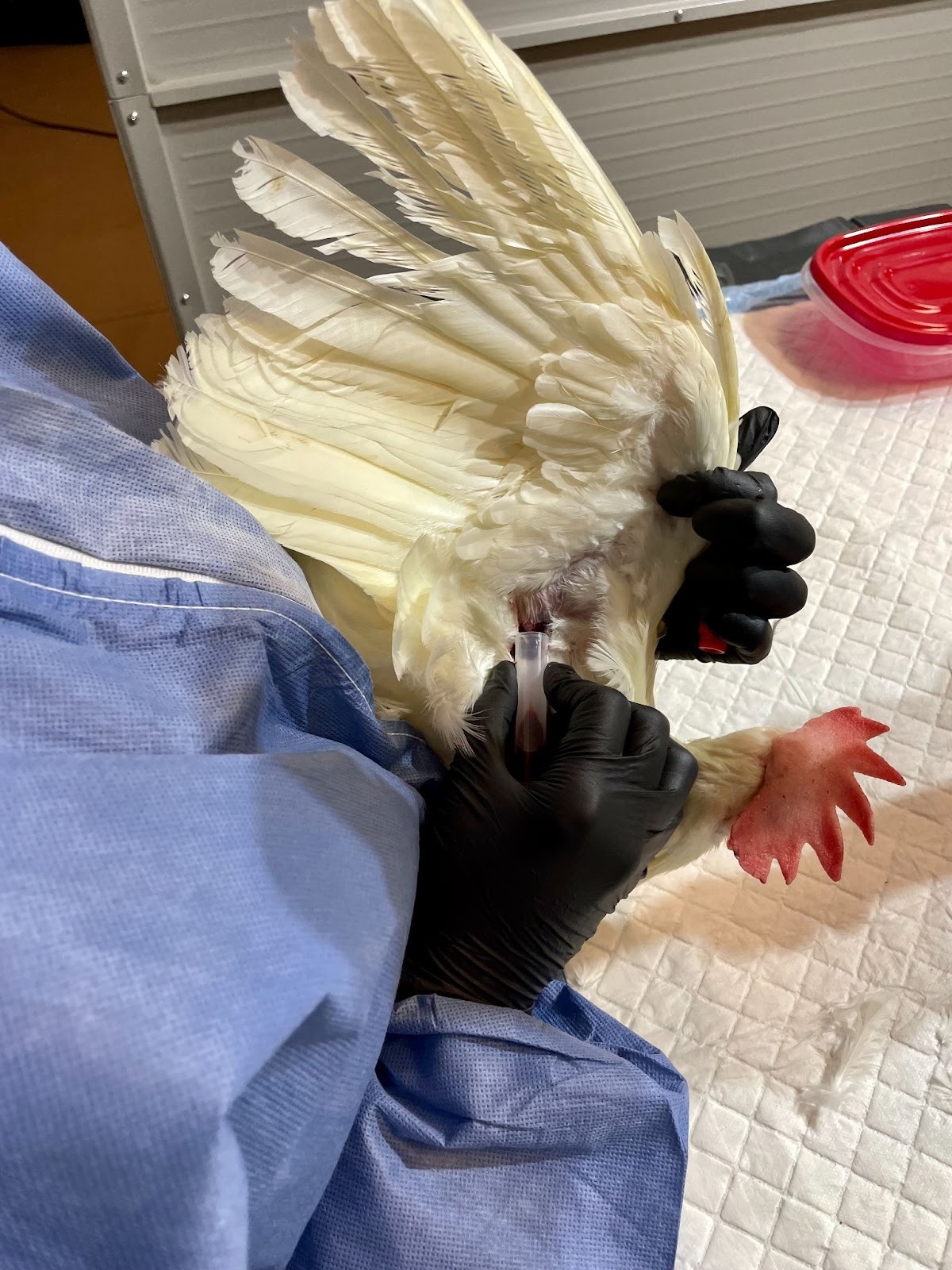
Before any flock can be considered part of the NPIP Program, it must first pass the qualifying testing requirements. This is done by collecting blood from the flock and verifying the birds are free from PT. The birds tested are marked with leg tags or other devices to ensure any birds that test positive can be identified.
To enter NPIP:
- All birds in the flock must be tested
- Maximum: 300 birds
- Testing is usually done by:
- State or federal NPIP tester
- Authorized veterinarian or technician
- All birds must test negative
If any bird tests positive (this is also called a reactor):
- Confirmatory testing is required
- Reactors are removed from the flock
- Follow-up testing is done per NPIP rules
Annual Re-testing (to stay NPIP PT-Clean)
Once a flock has qualified for the NPIP Program, re-testing needs to be conducted to maintain the status. For the PT program, the testing must be done every 12 months. If this testing is not completed within the timeframe, the NPIP status is no longer valid.
- PT testing must be done every 12 months
- Options depend on flock type:
- Full flock testing
- Approved representative sampling
- If you skip annual testing → NPIP status lapses
Testing Method for PT Status
The Pullorum-Typhoid testing is done using a blood sample. Most often this is done by collecting blood from the wing vein of a bird. Roughly 1 drop of serum is needed for this test, but it’s recommended to make sure enough blood is sent so that the lab has enough sample to test. If there is not enough sample available, the flock may need to be resampled.
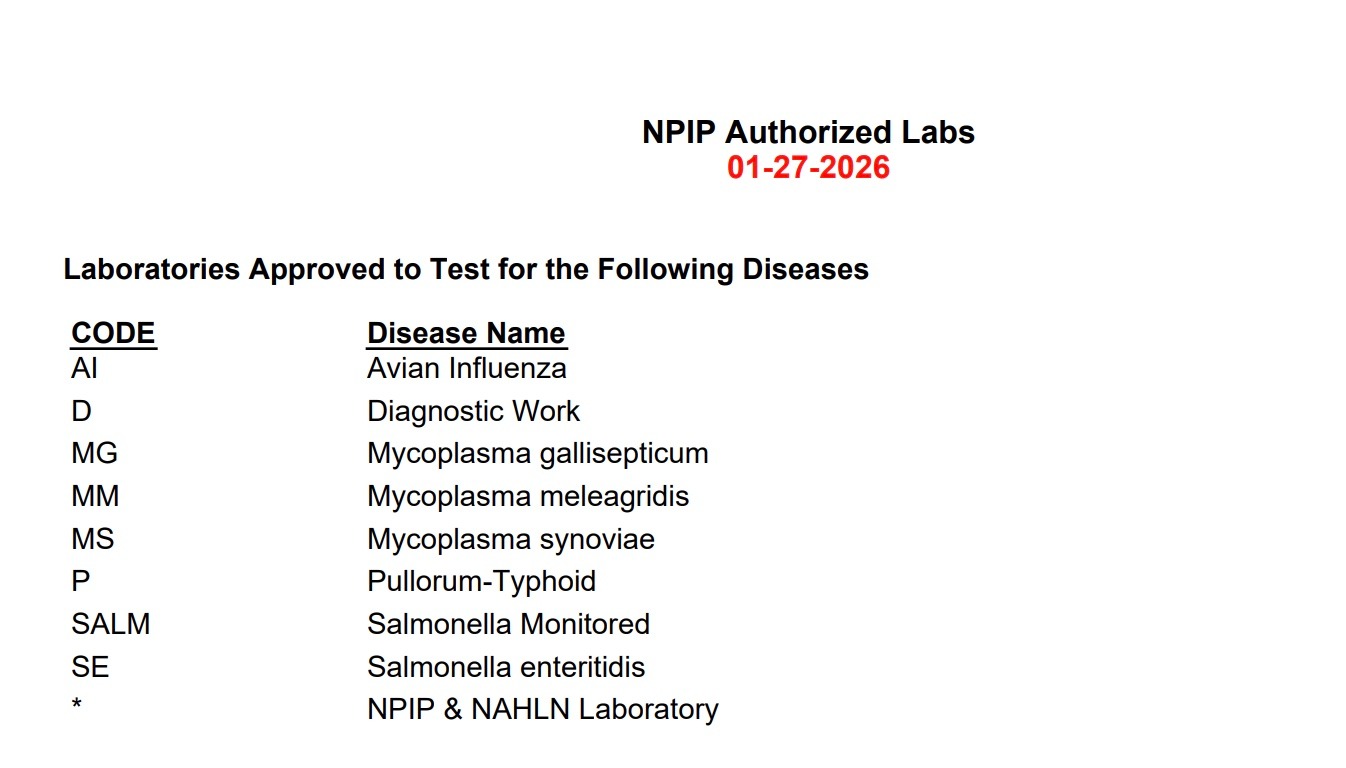
The name of the test that is run in the laboratory is called a Rapid Plate Agglutination. This must be done at an NPIP approved laboratory to ensure that proper training and laboratory standards are upheld. Additionally, only USDA-approved antigens can be used for this test. Ensuring samples are sent to an NPIP approved laboratory will safeguard the accuracy of the results.
Key Points:
- Blood test (rapid plate agglutination)
- Must use USDA-approved antigens
- Conducted at an NPIP approved laboratory
Notes on Sampling & Test Methods
Approved Tests: All tests used for NPIP certification must be approved by USDA’s Administrator as effective for the disease being tested. This means that not all tests for a specific disease are considered accurate enough to be included in the NPIP program. Always verify that the test being conducted is approved for use within NPIP. For PT testing, a blood sample is collected.
Official Sampling: Samples are typically collected by a certified state or federal tester or authorized technician. This can be a company veterinarian, a trained farm technician, or other qualified individual who knows the importance and ethics behind proper sample collection.
If a positive (also called a reactor) is found on initial screening, confirmatory testing and follow-up procedures apply per NPIP Program Standards.
Documentation & Records for PT Testing
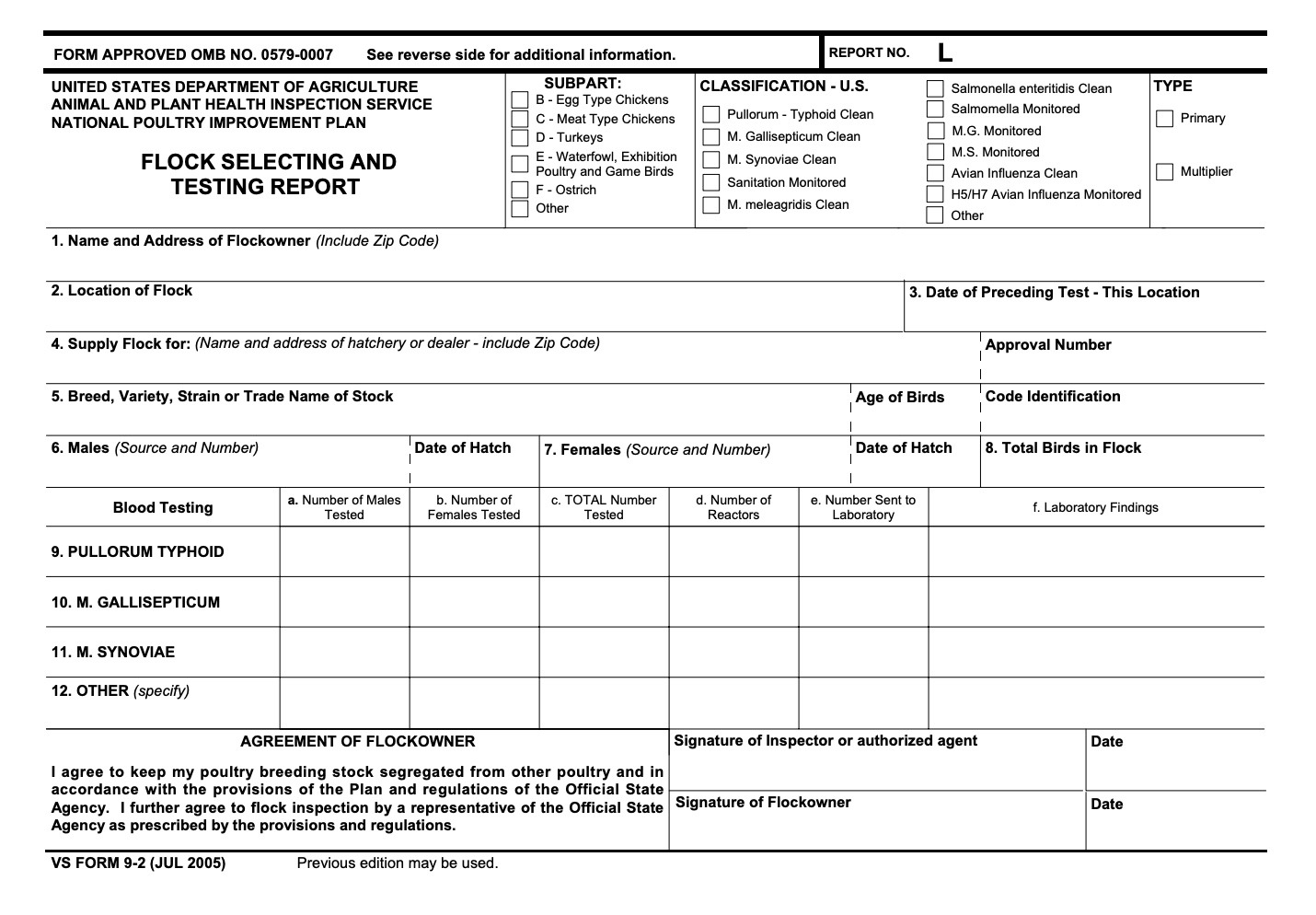
Documentation and proof of PT testing is an important part of the NPIP Program. Participants must keep accurate records, including test results, forms (such as VS Form 9-2 and 9-3), and sales documentation. These documents should be kept for at least 3 years.
Records that must be kept:
- Official testing records
- NPIP forms (VS 9-2 / 9-3, or state equivalents)
- Records of bird movement and sales
Interstate Movement & Exhibition
Birds moving interstate or entering exhibitions must either:
- Come from an NPIP-certified Pullorum-Typhoid Clean flock, or
- Have a recent negative test (often within 90 days) shown on official documentation.
Obtaining the NPIP PT-Clean status allows for birds to be sold and move across state lines. This makes things like moving pullets, placing chicks, and spiking roosters seen in many commercial poultry operations possible.
PT-Clean status allows:
- Interstate movement without individual bird testing
- Sale of hatching eggs, chicks, and breeding stock
- Hatchery operation under NPIP
- Entry into most poultry shows (for exhibition birds)
Regulatory Framework
NPIP testing requirements and standards are described in Title 9 of the Code of Federal Regulations (CFR), parts 145 & 146. These regulations outline which diseases must be tested, how often, and what tests are approved. Always consult the CFR for questions on specific testing requirements for a specific disease or species type.
Fequently Asked questions
Q: Do I need to participate in NPIP to move birds across state lines?
A: Yes, NPIP participation is required both for the movement and sale of poultry across state lines.
Q: How often do I need to do Pullorum-Typhoid (PT) testing on my flock?
A: Testing is done on every flock 4 months of age and older, then yearly on flocks that have already been tested.
Q: Are there different testing requirements for other diseases?
A: Yes, check the NPIP website for more information on all NPIP programs
Subscribe to our Newsletter
.png)
Ready to Work Together?
If you need a poultry veterinarian who understands the daily realities ofproduction, prevention and performance, Wilson Vet Co. is ready to help.
📞 Get In Touch
.jpg)