
TL:DR (Quick Summary)
Frostbite in poultry most often affects combs, wattles, and toes during cold winter weather. Early signs include pale or reddened tissue, which can progress to dark or necrotic areas if exposure continues. Frostbite is usually caused by ventilation or maintenance issues, not extreme cold alone. Lesions often appear several days after exposure, making the cause easy to miss. Most birds recover with supportive care and stable winter conditions, though healing can take weeks.
Frostbite: What to Look for in Winter Weather
Winter weather can be one of the toughest challenges for poultry producers. Even healthy birds raised in well-designed facilities are vulnerable to frostbite when temperatures plunge, especially when wind, moisture, and poor ventilation are involved. Frostbite in poultry isn’t just a cosmetic issue; it’s a painful condition that can compromise bird welfare and even production if left unmanaged.
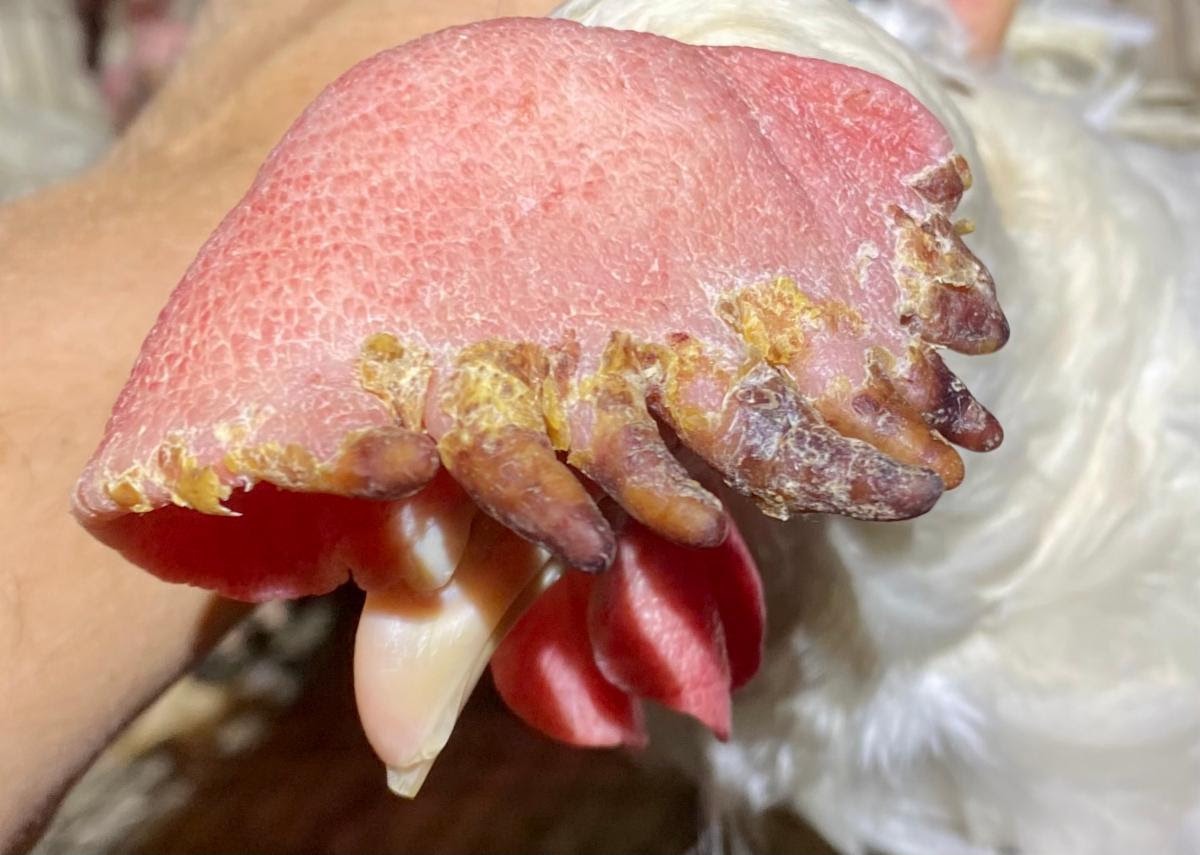
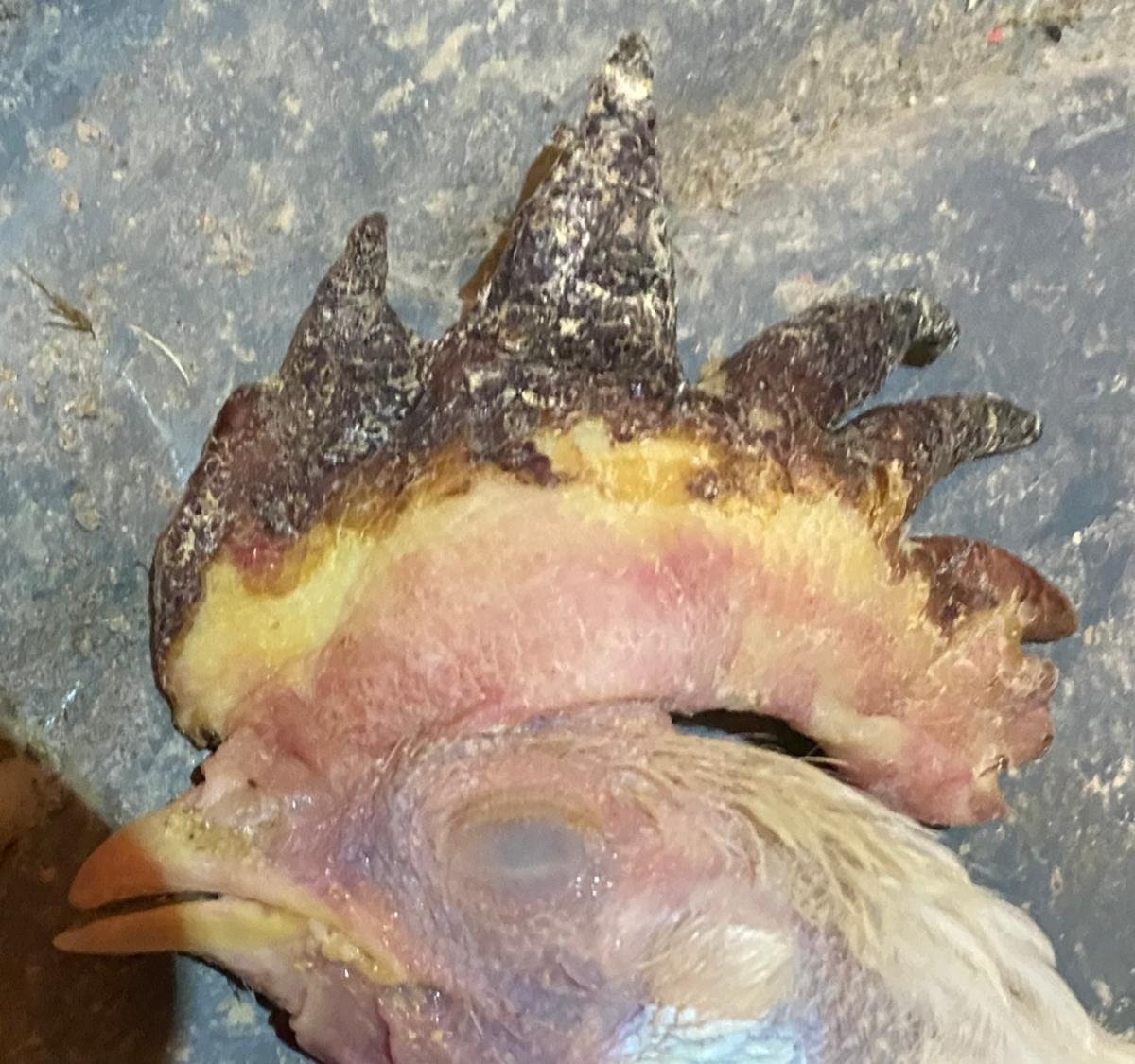
In modern poultry production, frostbite most commonly affects parts of the bird with limited feather coverage: combs, wattles, and toes. These exposed tissues have high blood flow and are therefore more prone to freezing damage.
Frostbite lesions can be alarming in a time of heightened awareness around Highly Pathogenic Avian Influenza (HPAI), especially because they often appear in clusters of birds within a cage, unit, or section of a house. Adding to the confusion, visible frostbite lesions usually develop several days after cold exposure, meaning the underlying cause may not be immediately obvious when the lesions are first noticed.
What Does Frostbite Look Like in Poultry?
Early Stages: Frostnip and Pale Tissue
The first signs of frostbite are often subtle. Initially, the skin on combs and wattles will turn pale or whitish. Toes and feet will start to show reddened patches on their surface. This is known as frostnip. Frostnip is superficial damage to the tissues that can be reversed if found and treated promptly.
Birds with early frostbite may also show mild distress. This can look like standing still, lifting feet off cold ground, or remaining unusually quiet. Because chickens and turkeys are prey animals, they often mask pain, so subtle behavioral changes are worth noting.
Advanced Frostbite: Darkened and Dead Tissue
As frostbite advances, tissue damage deepens. The most characteristic sign of moderate to severe frostbite is darkening of the skin, often progressing to black, dry, or necrotic tissue at the tips of combs, wattles, and toes. This reflects cell death due to freezing and loss of blood supply.
In toes, you might also notice swelling, blister-like areas, or reluctance to walk. Some producers describe advanced frostbite as a “crispy” appearance on affected tissues. Sometimes frostbite lesions even rupture and bleed. While the dead areas may eventually fall off, this can be distressing to see and demands careful management to prevent secondary infections.
How Did My Poultry Flock Get Frostbite?
Frostbite in commercial farms is never intentional. In extreme cold temperatures, some barn styles (and even human houses) struggle to keep up with freezing temperatures and high winds.
A gradual cold wind chill for a few hours overnight can also result in frostbite even in average winter temperatures. While one would think birds would move away, they just simply don't know any better having been accustomed to being indoors all or some of the time. Flocks accustomed to indoor temperatures don't know behaviors to protect against frostbite.
Maintenance of farm equipment is also critical in frostbite prevention. A stuck baffle or other mechanical/computer malfunction can leave ventilation systems open when they would normally be closed. Even in cold weather that is not extreme, these types of maintenance issues can cause frostbite in poultry flocks.
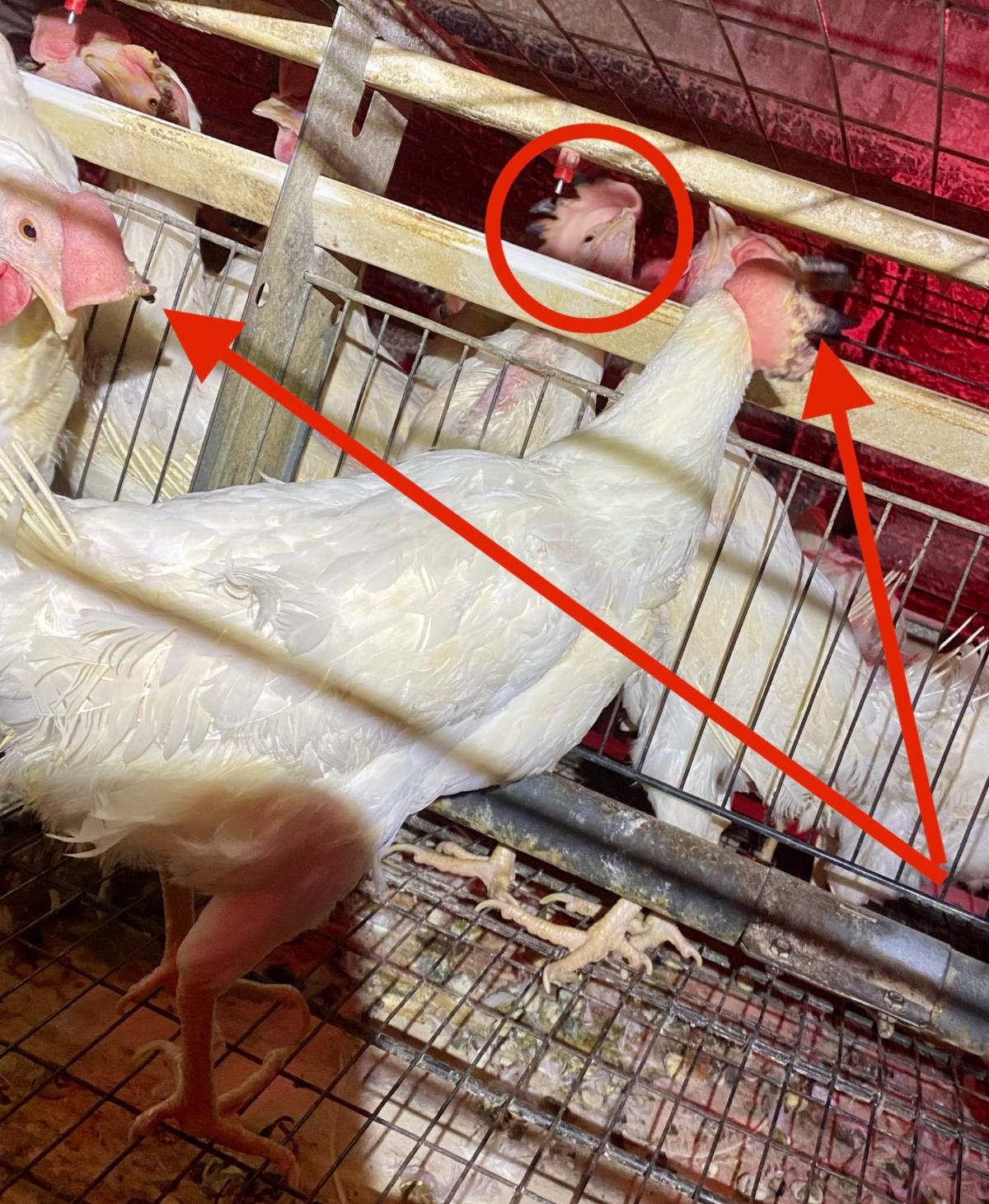
Most often, affected birds are in groups or cages nearest the elements (fans, port holes, etc.). It is important to remember that frostbite lesions appear several days after the birds were exposed. Looking back in time at weather and maintenance records will be essential to finding the cause for frostbite in a flock.
Will My Birds Recover from Frostbite?
Healing from frostbite takes time- weeks, not days. Mild cases may resolve quickly with proper care, but moderate to severe frostbite can involve prolonged recovery.
- Birds with frostbite can recover and heal the affected tissues, but their performance may be affected.
- Because these lesions are likely painful, if birds are too uncomfortable to eat or drink then appropriate euthanasia is recommended.
- Dead tissue from frostbite can attract bacteria and result in secondary infection.
How Can Frostbite be Prevented?
For Indoor Poultry
Keeping equipment in working order and temperature alarm systems functional are important parts of prevention.
For Outdoor Poultry
It’s important to monitor weather patterns and follow welfare program guidelines when allowing birds outdoor access. In sheltered or indoor areas, equipment maintenance and properly functioning temperature alarm systems are key in frostbite prevention.
Ready to Work Together?
If you’re looking for a poultry veterinarian who understands the daily realities of production, prevention, and performance, Wilson Vet Co is here to help.
📞 Contact us todayTo schedule a visit or learn more about our poultry health services in your area.
FAQ
Q: What part of a bird is affected by frostbite?
A: The combs, wattles, and toes.
Q: How often after cold weather does frostbite occur?
A: Frostbite lesions typically appear several days after cold weather.
Q: Are there any long-term effects from my flock having frostbite?
A: Most flocks recover very well, but this can take several weeks. Be on the lookout for secondary infections. If a significant portion of the flock was affected, production may be affected.
Q: Can poultry housed indoors get frostbite?
A: Yes, any bird that is exposed to cold temperatures can get frostbite, even if they are housed indoors.

Subscribe to our newsletter
Stay informed with the latest poultry insights, updates, and expert guidance from Wilson Vet Co. Join our community of veterinarians and producers working toward healthier flocks.